


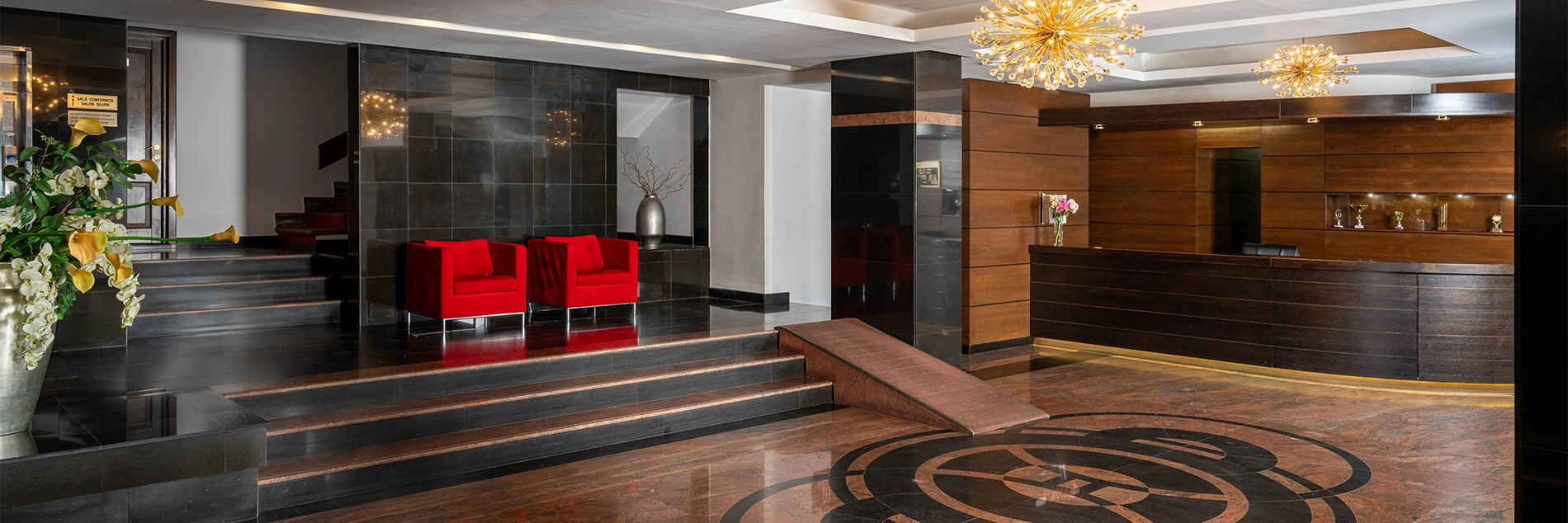
STRATEGIC FOOD WASTE MANAGEMENT PLAN – Hotel Pietroasa — 113 Rooms | All F&B Segments
Developed in accordance with Law no. 217/2016 (rep. MO 418/2024) & Methodological Norms (MO 816/2024)
Daily calculation formula:
DAILY QUANTITY = Rooms Reserved x Breakfast Consumption Rate (%) x Day Type Coefficient
| Ora | Action | responsive | Instrument |
|---|---|---|---|
| D-1 18:00 | Check confirmed reservations for the next day in PMS. Calculation of quantities according to the supply formula. | F&B Manager | PMS + Daily Sheet |
| D-1 20:00 | Transmission of internal kitchen orders by category. Validate available warehouse stock — FIFO priority. | Head Chef | Order form |
| 06:00 | Weighing initial stock removed from warehouse (recorded). Preparation in installments: 60% of the opening quantity. | Chef in charge | Scale + Daily register |
| 06:30 | Buffet opening. Reduced layout: small trays. Active live cooking station for hot dishes (pancakes). | Chef in charge of the shift | Exposure checklist |
| 08:00 | Consumption evaluation. Selective replenishment (tranche 2: 30%). Identification of items with consumption below 30%. | Chef in charge of the shift | Hourly monitoring sheet |
| 09:30 | 30 min before closing: NO more restocking. Exposure is reduced to a minimum. | Chef in charge | Buffet closure protocol |
| 10:00 | Closing buffet. Weighing waste by category (recorded). Sorting: (1) personal redistribution, (2) donation, (3) composting. | Head Chef | Scale + Register categories |
| 10:30 | Entering data into the monitoring spreadsheet. Comparison with previous day. | Head Chef | Excel / monitoring system |
MENIU CIRCULAR (Root-to-Stem / Nose-to-Tail)
Integral use of ingredients. "Preparation from surplus" on the menu — the dish of the day based on stocks close to expiration.
MODULAR PORTIONS (legal obligation)
Free offering to final consumers the possibility to take, at no additional cost, the food they have not consumed. Although this has been the case until now, starting with this plan it will be prominently mentioned in the menu.
FORECASTING DEMAND FOR COVERS
At below 50% occupancy, the variability of demand at the restaurant is high. Implement the "mise en place minimal" system: prepare semi-finished products (sauces, garnishes) and finish to order. Reduce the number of dishes on the menu by 20-25% seasonally — shorter menu = less excess.
VALUATION OF DAILY SURPLUS
Establish a protocol of 15:00 (lunch) and 21:30 (dinner): the chef checks the remaining stocks and prepares the "specials board" for the next evening meal / breakfast from the surplus. These dishes will be integrated into the staff menu. And the leftovers after disposal, will be offered to the staff for the use of the animals in the household.
| Problem identified | Concrete solution | Implementation |
|---|---|---|
| Orders partially consumed | Redesign of room service portions (-15% vs restaurant) | Immediate; Modification of the existing digital menu |
| Unconsumed water glasses/bottles | Small bottles (330ml) instead of 500ml; filtered water bottles at the room as an alternative | Small investment; Fast ROI |
| Untouched fruits/snacks | Welcome amenity | Check-in procedure change |
| Packaging waste | Certified compostable packaging | Average budget; medium impact |
| Instrument | Practical description | Estimated result |
|---|---|---|
| Final confirmation clause 72h | Standard contract with clause: the client confirms the final number of covers 72h before. If the number drops >10%, the quantities adjust automatically. | Eliminate 30-40% of overproduction |
| Event command formula | Quantity = Confirmations x 1.03 (buffer 3%, not current 10-15%). For corporate banquets = x1.00. For weddings/festivals = x1.05 | 20-25% waste reduction per event |
| Surplus staff meal | Explicit protocol: the immediate post-event surplus (in the first 2 hours) is redistributed to the hotel staff of the respective shift. | Zero additional cost; employee benefits |
| Event surplus donation | Active contract with NGO/food bank that can take variable quantities in max. 3 hours from the event. ANSVSA agreement. | Legal compliance; tax deductibility |
| Meniu circular banquet | Standard offer of 3 types of banquet menu that use 80% common ingredients — reduces special stocks per event. | 15-20% reduction in stock costs |
The hotel already has a digital menu — an excellent base.
| Automated flow | Implementation detail | Period |
|---|---|---|
| Daily export of bookings from PMS | Automatic report at 18:00 with occupancy projection D+1 and D+7 | Immediate |
| Calculated supply sheet | Excel template with formula — filled automatically from PMS export | Week 1 |
| Overstock alert | If warehouse stock > formula D+2, system alerts F&B Manager | Luna 2 |
| Monthly waste report vs. EMPLOYMENT | Automatic correlation: kg waste / number of covers / occupancy rate | Immediate |
| Annual dashboard (MADR report) | Automatic aggregation of data for the mandatory annual report | Final de an |
Surplus capitalization hierarchy (according to legislation)
| Priority | Destination | Condition | Legal framework |
|---|---|---|---|
| 1 — PRIORITY | Internal redeployment (hotel staff) | Food suitable for consumption, within the first 2 hours after preparation | No special obligations; internal regulation |
| 2 — MANDATORY (if there is surplus) |
NGO donation / ANSVSA authorized food bank | Food within the last 10 days of validity; active contract | Art. 2(2)c Law 217; GD 51/2019 Art. 6; tax deductible |
| 3 — ALTERNATIVE | Composting (bio-waste) | Food unfit for consumption; prep waste | Law 211/2011 waste regime |
| 4 — LAST OPTION | Household waste collection | Non-compostable final residues only | Mandatory documented as food waste |
| Phase | Period | Concrete actions | KPI the success |
|---|---|---|---|
| PHASE 0 Legal Compliance |
Immediate | 1. Elaboration and signing of the Annual Plan 2. Identification and contracting of the donation receiver operator 3. Creation of Donations Register and Waste Register 4. Menu update with the mention of free doggy bag 5. Internal communication with employees |
Zero non-conformities at ANSVSA control; Signed donation contract |
| PHASE 1 Quick Wins Mic Dejun |
Months 1-2 | 1. Implementation of supply formula based on PMS 2. Introduction live pancake cooking station 3. Replacement of GN 1/1 trays with GN 1/2 4. Daily protocol recording waste by category |
25-35% reduction waste at breakfast vs. baseline Month 0 |
| PHASE 2 Restaurant extension |
Months 3-4 | 1. Redesign banquet menu (3 types with common ingredients) 2. 72h confirmation clause in all event contracts 3. Room service protocol — reduced portions + bottles of water |
15-20% discount restaurant waste; Zero penalties event contracts |
| PHASE 3 Optimization |
Months 7-10 | 1. Seasonal menu discount with 20-25% dishes 2. Implementation of donation (local partner) |
Cumulative discount 40-50% vs. baselines; Green Key certification (optional) |
| PHASE 5 Reporting & Scaling |
Months 11-12 | 1. Preparation of annual report for MADR 2. Registration on the MADR national platform 3. Annual internal audit of the plan 4. Plan update for the following year |
MADR report submitted on time; established Year 2 objectives |
| KPI | Unit of measure | Target Year 1 | Frequency measurement |
|---|---|---|---|
| Total waste of breakfast | kg / 100 covers | 40% discount vs. baseline | Daily |
| Total waste restaurant | kg / 100 covers | 25% discount vs. baseline | Daily |
| Documentary compliance | % checklist completed | 100% | Weekly |
| Frequency | Activity | responsive | It generates a document |
|---|---|---|---|
| DAILY | Weighing and recording waste per category (buffet, restaurant, RS) | Head Chef | Daily waste register |
| LUNAR | F&B meeting: analysis of top 3 waste categories; supply adjustment | Manage + Chef | - |
| QUARTERLY | Internal audit documentary compliance; updating procedures | Director Hotel | Internal audit report |
| ANNUAL | Annual MADR report; Annual Plan update; employee training | Management | MADR Report + Our Plan |
November 2, 2018
SC PIETROASA S.A. is the beneficiary of the project with the title "Construction of an apartment-type tourist accommodation structure", SMIS code 116825, project financed by the Regional Operational Program 2014 - 2020, Priority Axis 2 - "Improving the competitiveness of small and medium-sized enterprises", Investment Priority 2.2 - "Supporting the creation and expansion of advanced production capacities and the development of services".
The financing contract was signed on 05.09.2018 with the Ministry of Regional Development and Public Administration, as the Management Authority and with the Agency for Regional Development of the South-East Development Region, as the Intermediate Body for the Regional Operational Program 2014-2020.
The total value of the project is 8,789,903.20 lei, of which: the eligible non-refundable amount from the European Regional Development Fund 3,608,815.56 lei, the eligible non-refundable amount from the National Budget 636,849.81 lei, the value of the Beneficiary's eligible co-financing 2,618,788.58 lei, the ineligible amount including VAT 1,925,449.25 lei.
The general objective of the project is to increase the company's competitiveness on the hotel services market.
The specific objectives aim at:
The project implementation period is 48 months: 02.02.2017 – 31.01.2021.
For additional information, those interested can call: 0724383628, e-mail: [email protected], contact person: ZAHARIEA ANTOHE – Project Manager.
December 20, 2021
Societatea Comercială PIETROASA S.A. Buzău carried out, starting on 05.09.2018, the project entitled "Construction of a tourist accommodation structure of apartment type", SMIS code 116825, project financed by the Regional Operational Program 2014 - 2020, Priority Axis 2 - "Improving the competitiveness of small and medium-sized enterprises", Investment Priority 2.2 A - "Supporting the creation and expansion of advanced capacities of production and service development".
The project was implemented in the municipality of Buzău, Strada Armoniei, no. 13, Buzău county, and had as its general objective the increase of the company's competitiveness on the market of hotel services.
The total value of the project was 8,789,903.20 lei, of which: the non-refundable eligible value from the European Regional Development Fund 3,608,815.56 lei, the non-refundable eligible value from the National Budget 636,849.81 lei, the value of the Beneficiary's eligible co-financing 2,618,788.58 lei, the non-eligible value including VAT 1,925,449.25 lei.
Project results:
The project has a direct impact on the local community, through its contribution to the development of the local business environment and the creation of 5 new jobs.
For additional information, those interested can call: 0724383628, e-mail: [email protected], contact person: ZAHARIEA ANTOHE – Project Manager.
